PLA

Tuesday, May 31, 2016

Amazon.com, Inc. (AMZN) Boosts Commissions Charged to Third-Party Sellers


Amazon.com, Inc. (AMZN) Boosts Commissions Charged to Third-Party Sellers

amazon money,commission
amazon.com

Amazon.com, Inc. (NASDAQ:AMZN) is looking to reduce its losses and increase profits in India. One way to achieve this is to boost commissions it charges to third-party sellers. The retail giant isn’t the only one doing this. Other ecommerce firms are looking to make more money in the South Asian economic powerhouse.

Amazon.com, Inc. Irks Indian Sellers With Changes

Amazon has been in India since 2013. At first, the website simply sold films, TV shows and books. Today, it pretty much sells everything, from mobile phone accessories to clothing.
Amazon India has raised the referral rates, or commissions, it charges to third-party sellers. On the marketplace, these sellers can now expect to pay up to an additional nine percent. The website applied the referral rate hike on an array of products last month.

The tech titan also raised fees for logistic support it offers sellers. According to revised rates, a minimum charge will be applied to products with weights of up to 500 grams. If a product is heavier than 500 grams then the third-party seller will be charged in multiples of the price for every 500 grams.

Sellers are upset by these changes. They are even more bothered by the fact that some sellers face less charges than others. It was reported that CloudTail saw its commissions fall, while others had to pay heftier fees.

A spokesperson of the All India Online Vendors’ Association (AIOVA) adds that the firm did not consult with its sellers before making the changes.

“Changes in commission cannot be avoided. But Amazon is on a one-sided track, not taking sellers’ views on policy changes,” a media rep told a local news outlet.

In the meantime, sellers have passed on the extra costs to customers. This has resulted in the drop in sales as high as 60 percent. The steep decline is huge considering that the nation’s ecommerce market is projected to spike from $26 billion to $103 billion in 2020.

Amazon.com, Inc. Trying to Make its Mark in India


A lot of brands have been established in India. An array of firms are looking to profit from the growing economy in the South Asian land. It isn’t just Amazon, but also Wal-Mart Stores, Inc. (NASDAQ:WMT) and Apple Inc (NASDAQ:AAPL). But Amazon is trying to beat them all.

Earlier this year, the website bought Indian payments process Emvantage. The move is part of an attempt to provide local customers with an in-house payments processing platform. The acquisition would be merged into Amazon India in an effort to boost sales.

Amazon wants a big piece of that $103 billion pie. This is why it’s trying everything to maintain a steady and loyal customer base. However, in recent months, Alibaba Group Holdings Ltd (NYSE:BABA) has also been sniffing around India, making its presence known.

Whether or not others can oust the firm from the top seat remains to be seen. Amazon already has an edge over its rivals and that is instant gratification.

The website has developed its own logistics and distribution networks. This means customers can buy and receive their products much faster when using Amazon.

And one survey found that Indian shoppers trust the Amazon brand more than any other one.

For the time being, the firm’s investment in India is paying off. Can other brands beat Amazon at its own game? Only time will tell.


source: Learnbonds

3-Ex-Barclays director accused by U.S.


UPDATE 3-Ex-Barclays director accused by U.S. of illegal tips to plumber

Barclays Rates in Stock Exchange
Barclays 

May 31 A former director at Barclays Plc was arrested on Tuesday on U.S. charges that he provided inside information about impending mergers he learned about at the bank to a plumber, who used the tips to make $76,000 illegally.

Steven McClatchey, 58, was charged in a criminal complaint filed in Manhattan federal court with conspiracy, wire fraud and securities fraud after the plumber, Gary Pusey, secretly pleaded guilty on Friday and agreed to cooperate with authorities.

McClatchey, who worked at the British bank in its Manhattan offices from December 2008 to December 2015, was arrested on Long Island, where he resides. He was released later in the day following a court hearing.

McClatchey's lawyer, Steven Kartagener, declined to comment. An attorney for Pusey, 47, did not respond to requests for comment.

The charges were announced by Manhattan U.S. Attorney Preet Bharara, who has overseen an insider trading crackdown that has resulted in 102 people being charged and 78 being convicted since 2009.

That push has suffered recent setbacks following a 2014 appellate ruling that limited the scope of insider trading laws, resulting in charges being dropped or dismissed against 14 defendants.

According to the complaint and a related U.S. Securities and Exchange Commission lawsuit filed on Tuesday, McClatchey was responsible for tracking all potential deals involving the bank.

He began tipping Pusey, a friend he met through boating, as early as 2013, enabling the plumber to execute trades ahead of merger announcements involving 11 companies, including Forest Oil Corp and PetSmart Inc.

In exchange, Pusey paid thousands of dollars in cash to McClatchey, sometimes placing cash in a gym bag that McClatchey brought with him to a marina in Freeport, New York, and provided free bathroom remodeling services, authorities said.

While Barclays was not identified by name in court papers, the bank confirmed it was the British investment bank that had employed McClatchey.

In a statement, Barclays said it has cooperated fully with authorities, including the Federal Bureau of Investigation and the SEC "since learning about this incident involving a former employee."

The cases in the U.S. District Court, Southern District of New York, are U.S. v. McClatchey, No. 16-mj-3433, and Securities and Exchange Commission v. Pusey, No. 16-cv-04029. (Editing by Cynthia Osterman and Matthew Lewis)


source: Reuters

Viacom Shareholders Want New Management


Shari Redstone Says Viacom Shareholders Want New Management

Shari Redstone, the daughter of media billionaire Sumner Redstone
Shari Redstone. 

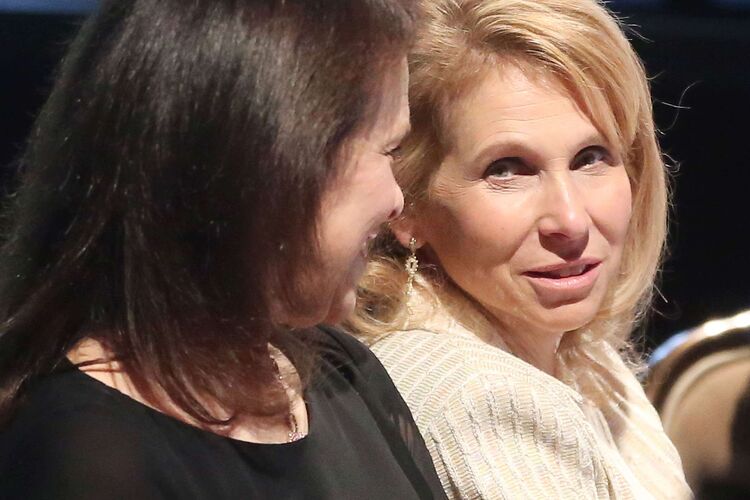
Shari Redstone, the daughter of media billionaire Sumner Redstone, said Viacom Inc. shareholders want new management -- the strongest indication yet that the family controlling the company may seek to oust Chief Executive Officer Philippe Dauman.

Shari Redstone, who is vice chair of Viacom, said in a statement issued Tuesday by a spokeswoman that she has no desire to manage the company or become chairman. Her remarks were in response to comments Monday from lead director Frederic Salerno, who said Viacom’s board members would fight any attempt to remove them.

National Amusements Inc., owned by Redstone and his daughter, holds an 80 percent voting interest in Viacom. Wielding that stake, Redstone, 93, could call a special meeting of the media company’s directors and replace the board, according to billionaire Mario Gabelli, the second-largest owner of Viacom voting shares. Any effort to do so is likely to be challenged in court by Viacom’s board, he said in an interview.

“This is basically legal entanglement,” Gabelli said.
Shares of Viacom had fallen 40 percent over the past year before rallying in recent days as Redstone began to reassert his control over the company, the owner of Comedy Central, Nickelodeon and Paramount Pictures. Redstone also controls CBS Corp.

“The shareholders whom Salerno and the other independent directors purport to represent have already spoken -- they want new management ‎at the top and strong directors with independent oversight on the board,” Shari Redstone said through her spokeswoman. “The board should spend less time focusing on Shari and how to maintain their own directorships, and more time on a long-term strategy to increase the value for shareholders and to develop a specific long-term plan to turn around the current state of Viacom.”
Gabelli reiterated comments he made earlier this year that Dauman had “six to nine months” to boost the stock price. Viacom’s CEO has achieved one milestone, renewing a programming with Dish Network Corp., one of the largest U.S. pay-TV companies, the investor said.
Next, Gabelli added, Dauman has got to “get cash in and get into the digital world,” likely through a joint venture between Paramount and a technology partner.
Salerno, in his statement Monday, said Viacom is still considering selling a minority stake in Paramount, yet acknowledged Redstone’s opposition to a deal could hinder those efforts.

“We hope that the fight over control does not impair or completely undermine this potential step with Paramount,” Salerno said.


source: Bloomberg

Monday, May 30, 2016

Disney vows to fight


Disney vows to fight after its characters are spotted at rival Chinese theme park


A Chinese woman poses with a worker dressed in a Star Wars storm trooper costume at the Wanda Mall at the Wanda Cultural Tourism City in Nanchang. ((Mark Schiefelbein / Associated Press))
A Chinese woman poses with a worker dressed in a Star Wars storm trooper costume

The chairman of China’s biggest conglomerate recently predicted that a new $5.5-billion Disney theme park opening in Shanghai next month would fail, citing a lack of innovation with intellectual properties and characters.

But when that same conglomerate, Dalian Wanda Group Co., opened a rival theme park over the weekend, visitors were greeted by workers dressed as Disney characters, including Captain America, Snow White and Star Wars storm troopers.

Disney vowed to take action to protect its intellectual property rights.

“We vigorously protect our intellectual property and will take action to address infringement,” Disney said in a statement to Bloomberg News.

It was only a week ago that Wang Jianlin, chairman of the Wanda Group, predicted that the 15 to 20 theme parks his company plans to build throughout China will outperform the Shanghai Disney Resort by offering lower prices and “constant innovation.”

Over the weekend, Wanda Group opened the first of those planned parks, the Wanda Cultural Tourism City in Nanchang, in the southeastern Jiangxi province. The development features a theme park, a movie park, an aquarium, hotels and retail stores.

Wang compared Disney’s massive Shanghai park to a tiger that “is no match for a pack of wolves,” he said, referring to his planned theme park.

Asked about the Disney characters at the Wanda theme park, the Wanda Group told Bloomberg News that the characters were “operated by individual stores within Wanda Mall. They do not represent Wanda.”

The theme park rivalry brewing in China is targeting members of the surging Chinese middle class, who have disposable incomes but few tourism attractions or vacation destinations to choose from.

Other major theme-park developers, including Universal Studios and Six Flags Entertainment, are planning to build parks in China to take advantage of the growing market.

By 2020, China will outnumber the U.S. in park-goers, according to a study by the Los Angeles-based engineering firm AECOM.

source: www.latimes.com

Bitcoin vs. Ether


Bitcoin vs. Ether: We Will Invest In and Transact with Ether Differently, Here is Why


Will we invest in and transact with Ether differently than we do with Bitcoin, since the two currencies have different monetary policies?

Ether has been dubbed Bitcoin’s challenger or its rival – Andreas Antonopoulos’ warning to stop calling ethereum "the bitcoin rival" is generating an intense debate on Twitter and Reddit.

What individuals make of the growing debate over Ether and Bitcoin rages on with comparison being made from the point of view of how people invest in and transact with the two digital currencies.

Ethereum as a means of exchange


Analyst and Blockchain Products Lead at ARK Investment Management, Chris Burniske, predicts that Bitcoin will be used more as a store of value, while Ether, which is needed to power the smart contracts that are the main appeal of the Ethereum network, will be used more as a means of exchange.

In a Forbes piece, he states:

“Both the Bitcoin and the Ethereum systems are built on a blockchain through which every transaction is recorded publicly allowing money and assets to be exchanged more quickly and more cheaply than using a long chain of middlemen.”

Potential for trading


In December 2015, Ether was trading at less than $1. Now it has risen to $15 - almost by a 15-fold increase in six months. This, as well as Ethereum’s ability to create binding financial agreements that can be enforced entirely by software, has created a great deal of user interest in investing in the digital currency.

It didn’t then come as a surprise that about 11,000 anonymous people invested $150 million into the DAO - or the Decentralized Autonomous Organization. This Ether-nly crowdfund gives every investor the right to vote directly on any major allocation of the organization’s capital for proposed projects with a view to share in the profit accruing from such investments.

Different consumers of Ether and Bitcoin


However, unlike Bitcoin, which now boasts of 670 BTMs (teller machines) and payment acceptance in more than a hundred thousand outlets in various parts of the world, Ether-denominated electronic payments are still rare. It is mostly used to run programs on the Ethereum network, just like the DAO.

The Executive Director of Strength in Numbers Foundation, David Duccini, notes to CoinTelegraph:

“The consumers of Ether will likely be slightly different. Both support speculation but Ether itself is consumed by applications. So people who want their apps to run are going to need to top off the gas tank as it were. It also is an issue for a DAO that, unless the DAO is capable of generating new Ether, it will eventually stop running “Pay to Play” platform.”

source: www.cointelegraph.com

Sunday, May 29, 2016

The best Memorial Day sales and deals of 2016


The best Memorial Day sales and deals of 2016

Americans will pay tribute to fallen military service members on Memorial Day. But over the long weekend, they’ll also probably head outdoors for sun, barbecue — and some shopping.


Americans will pay tribute to fallen military service members on Memorial Day.
But over the long weekend, they’ll also probably head outdoors for sun, barbecue — and some shopping.
For the unofficial start of summer, we’ve compiled our favorite Memorial Day sales and deals. Many promotions last longer than just the official holiday, which is May 30.
Recommended: 17 fresh fruit desserts
  • Amazon: Shop time-sensitive deals on party supplies, books, apparel and more.
  • Aeropostale: Take 50% off almost everything.
  • Bed Bath & Beyond: Visit the Memorial Day Savings Event for price cuts on everything from bedding to small kitchen appliances.
  • Carter’s: Nearly the entire site and store is 50% off (some exclusions apply).
  • Crane & Canopy: Score free shipping on all orders over $150 from May 27 through May 30.
  • Chevrolet: Save on select crossover models.
  • Dick’s Sporting Goods: Get deep discounts on canopies, kayaks, hammocks and other outdoor gear.
  • Dyson: Through June 11, save $50 on Dyson fans and fan heaters.
  • Eastern Mountain Sports: Camping gear is 20%-40% off, apparel is up to 50% off and all climbing gear is up to 25% off.
  • eBay: Shop a selection of Memorial Day-themed products.
  • GhostBed: Through May 31, customers can order a mattress of any size and receive $75 off using promo code MEMORIAL75 at checkout. Mattress sizes are available in twin to California king. Free shipping is also included.
  • Home Depot: Get $10 off select one-gallon paint cans and $40 off select five-gallon buckets via a rebate offer.
  • Joss & Main: Take an extra 15% off Memorial Day deals with code SUMMER16.
  • Lenovo: Through May 30, get up to 25% off select professional laptops.
  • Macy’s: From May 25 through May 30, save on select fashion and home styles. Deals include 25%-40% off Calvin Klein jeans for him and her and 40% off select bedding.
  • Maytag: Through June 4, get up to $750 by mail-in rebate with purchase of select Maytag appliances.
  • Sears: Online and in-store through June 4, save up to 30% on vacuums and floor care, plus shop savings on major kitchen appliances.
See each retailer’s website for full promotional details.

source: csmonitor

Coca-Cola unveils patriotic cans in USO partnership


Coca-Cola unveils patriotic cans in USO partnership


Coca-Cola and the USO are promoting a campaign to sent 1 million messages to service members. (Source: Coca-Cola via CNN)

(CNN) - Coca-Cola has rolled out patriotic themed soda cans to celebrate 75 years in partnership with the USO.

The soda company's "I'm proud to be an American" cans are red, white and blue and designed to resemble a waving American flag.

The cans honor members of the military and will be stores through Independence Day.

The limited edition cans also promote the joint "Campaign to Connect" co-sponsored by the USO. The group is trying to get 1 million messages of support to members of the Armed Forces.

Messages can be sent online at www.uso.org

source: wtvm

Friday, May 27, 2016

Workday (WDAY) Stock Drops Ahead of Q1 Earnings


Workday (WDAY) Stock Drops Ahead of Q1 Earnings.

Workday (WDAY) stock is falling before the company reports its fiscal 2017 first quarter financial results Tuesday after the market close.


NEW YORK (TheStreet) -- Workday (WDAY) stock is declining 3.28% to $75.44 on heavy trading volume Friday afternoon, ahead of the company's fiscal 2017 first quarter financial report due out Tuesday after the closing bell.

Shares of the enterprise cloud application provider are being pressured today after Wedbush downgraded the stock to "underperform" from "neutral."

Analysts noted that first quarter channel checks "point to softer implementation pipelines due to pressure from macro-related and competitive factors," Barron's reports.

Even though Workday faces strong competition from Oracle (ORCL), other analysts believe the company will deliver better-than-expected results next week.

"We are expecting Workday to beat consensus estimates and we look for continued signs of traction for its financials offering, which we view as the next pillar of growth for the company," Barclays analysts said in a note released Thursday.

Overall, Wall Street is anticipating a loss of 2 cents per share for the fiscal first quarter, unchanged from the same period a year ago.

Revenue is expected to increase by 35% year over year to $338.68 million for the latest quarter, compared with $250.96 million.

So far today, 2.04 million shares of Workday have been traded, compared with its average daily volume of 1.94 million shares.

Separately, Workday has a "sell" rating and a letter grade of D at TheStreet Ratings because of the company's deteriorating net income, disappointing return on equity, generally disappointing stock performance and feeble earnings per share growth.


TheStreet Ratings objectively rated this stock according to its "risk-adjusted" total return prospect over a 12-month investment horizon. Not based on the news in any given day, the rating may differ from Jim Cramer's view or that of this article's author.

Y-Charts
Ycharts

source: www.thestreet.com

U.S. economic growth revised higher in first quarter


U.S. economic growth revised higher in first quarter.

U.S. economic growth revised, people are shopping
People are seen inside shopping at a Costco Wholesale warehouse club in Westbury, New York, U.S., May 23, 2016.

U.S. economic growth slowed in the first quarter although not as sharply as initially thought, as a surge in home building and steady inventory accumulation partially offset the drag from a steep decline in business investment.

Gross domestic product rose at a 0.8 percent annual rate as opposed to the 0.5 percent pace reported last month, the Commerce Department said on Friday in its second GDP estimate for the January-March period.

That was the weakest growth since the first quarter of 2015. The economy grew at a rate of 1.4 percent in the fourth quarter.

But a sharp upward revision to income growth and a rebound in corporate profits in the first quarter brightened the picture. When measured from the income side, the economy grew at a 2.2 percent rate after expanding at a 1.9 percent pace in the fourth quarter.
Economists said strong income growth, together with signs the economy was picking up steam in the second quarter, could give the Federal Reserve the ammunition to raise interest rates as early as next month. The U.S. central bank increased rates in December for the first time in nearly a decade.

"This gives us more confidence that growth will hit its marks in the second quarter ... enough forward speed for the Fed to continue with its gradual pace of rate hikes," said Chris Rupkey, chief economist at MUFG Union Bank in New York.

Thursday, May 26, 2016

INSIDE THE ‘OUTINGS’ OF PETER THIEL


INSIDE THE ‘OUTINGS’ OF PETER THIEL.

Peter Thiel, co-founder of PayPal, during a panel discussion in Beverly Hills, California, on May 1, 2013.
Peter Thiel, co-founder of PayPal


There have now been two “outings” of Silicon Valley billionaire Peter Thiel—and they’re not just interlinked. One, apparently, is the cause of the other.

The first occurred in a 2007 blog post on Valleywag, a now-defunct Gawker publication, which boldly stated, “Peter Thiel is totally gay, people.”

The second happened Monday, when Forbes outed Thiel, a venture capitalist, technology entrepreneur and avowed libertarian, as the financial backer of former pro-wrestler Hulk Hogan in a massive lawsuit against Gawker.
Thiel, 48, a co-founder of PayPal and a board member at Facebook, publicly confirmed Wednesday that he’s covered roughly $10 million in expenses for Hogan’s lawsuit, saying he considers it “one of my greater philanthropic things that I’ve done.”
Hogan sued Gawker for publishing a sex tape of him and a former friend’s wife (now ex-wife) on its website in 2012 that showed nudity, as well as Hogan uttering a racial slur, for which he has since apologized. In the suit, Hogan said he was unaware that he was being taped and has suffered enormous emotional and reputational damage as a consequence of Gawker’s release of the tape.

Hogan’s lawyer was not immediately available to comment, but the suit raised a number of legal questions about how the press balances First Amendment rights of free speech against an individual’s right to privacy. (In Hogan’s case, the jury found his privacy had been violated, awarding him $140.1 million in damages.) But Thiel’s move to personally funnel millions into the Hogan suit has sparked fresh concerns about how some billionaires clandestinely try to muzzle or influence what the media are allowed to publish.
In a revealing interview with The New York Times late Wednesday, Thiel said he’s funding at least one other legal action against Gawker in addition to the Hogan lawsuit. “It’s safe to say this is not the only one,” he confirmed, adding that he’s assembled a legal team to identify cases he might bankroll against the website, which he called a “singularly terrible bully.”

There’s nothing new about billionaires wanting to control or even own the press: Amazon founder Jeff Bezos purchased The Washington Post, and News Corp. Chairman Rupert Murdoch acquired The Wall Street Journal.

There’s also nothing new about billionaires attempting to silence their critics. Republican front-runner Donald Trump, whom Thiel, a California GOP delegate, has openly pledged to back for president, has tried to do so repeatedly, frequently blocking the media from covering his rallies.
But Thiel’s campaign against Gawker is different in that he sought to attack Gawker in secret, allowing Hogan’s suit to be the public face of his war on the media organization. Clandestinely funding Hogan puts Thiel in league with billionaires such as the Koch brothers, who have been criticized for funneling “dark money” into nonprofit organizations backing candidates for public office, while remaining invisible.

Thiel declined to comment to Newsweek, but in his interview with the Times, he said he is not against a free and open press, but he opposes what he sees as Gawker’s unchecked and unfettered privacy violations. Thiel said he hoped challenging Gawker would be a “deterrence” against more violations of privacy like those he and Hogan have suffered.

“I refuse to believe that journalism means massive privacy violations,” he told the Times. “I think much more highly of journalists than that. It’s precisely because I respect journalists that I do not believe they are endangered by fighting back against Gawker.”
That may sound like spin, but Thiel’s philanthropic efforts have included supporting journalism-advocacy groups such as the Committee to Protect Journalists, a New York–based nonprofit. A spokesperson for the group says it received $1.075 million from Thiel from 2008 to 2013 and sometimes as much as $250,000 a year.

“We support the right of individuals in the United States and around the world to seek civil redress in cases of defamation,” the group’s executive director, Joel Simon, said in a statement Wednesday in reference to Thiel’s decision to back Hogan. “However, we do not support efforts to abuse the process by seeking to punish or bankrupt particular media outlets.”

Hogan’s suit really could gut Gawker. In an unusual move by his legal team, the former wrestler isn’t seeking damages from the media company’s insurer but directly from Gawker itself, as well as its founder, Nick Denton. (Both are appealing the suit.) Gawker does not have billions at its disposal, so while reasonable minds can differ over whether Denton’s company had it coming, there is no equality of arms in this fight. Thiel’s pockets are indisputably deeper.
The PayPal co-founder told the Times he is not bankrolling the Hogan suit to make money; he’s targeting Gawker because the website has published stories that he says have been “very paralyzing and painful for people who were targeted,” including some of his friends.

Considering Thiel has a personal reason for targeting Gawker, it may also be a stretch to call it philanthropic.

One suggestion: Rather than assembling a legal team to exclusively attack Gawker, Thiel could start a third-party litigation firm to scour for lawsuits wherever he sees similar “victims” of injustice, like the ones he told the Times have allegedly been hurt by Gawker. That would make him the hero and not just a bully trying to bully another.

source: www.newsweek.com

Tuesday, May 24, 2016

U.S. new homes sales hit eight-year high, point to firming economy


U.S. new homes sales hit eight-year high, point to firming economy.


U.S. new homes sales hit eight-year high, point to firming economy
A man walks on a job site of a home under construction in Manhasset, New York September 16, 2015.REUTERS/SHANNON STAPLETON

New U.S. single-family home sales recorded their biggest gain in 24 years in April, touching a more than eight-year high as purchases increased broadly, a sign of growing confidence in the economy's prospects.

Tuesday's report from the Commerce Department, which also showed a surge in new home prices to a record high, offered further evidence of a pick-up in economic growth that could allow the Federal Reserve to raise interest rates soon.

"Consumers are taking the leap and buying the biggest of big ticket items of their lives and this speaks to confidence. The Federal Reserve can raise rates at their June meeting without fear the economy is going to slow," said Chris Rupkey, chief economist at MUFG Union Bank in New York.
New home sales jumped 16.6 percent to a seasonally adjusted annual rate of 619,000 units, the highest level since January 2008. The percent increase was the largest since January 1992.

Data for February and March were revised to show 39,000 more units sold than previously reported. Economists had forecast new home sales, which account for about 10.2 percent of the housing market, rising to only a 523,000 unit-rate last month.

New home sales increased broadly, with the exception of the Midwest. April's increase, however, probably exaggerates the housing market strength given that homebuilders confidence has stagnated since rising in January.

New home sales are extremely volatile month-to-month and preliminary figures are subject to large revisions because they are mostly drawn from building permits data. Still, last month's gain pushed new home sales well above their first-quarter average of 531,667 units.

The new home sales report came in the wake of fairly upbeat data on home resales and residential construction. It also added to retail sales and industrial production reports in suggesting that the economy was gathering speed after growth slowed to a 0.5 percent annualized rate in the first quarter.

Minutes from the Fed's April 26-27 policy meeting, published last week, showed most officials considered it appropriate to raise rates in June if data continued to point to an improvement in second-quarter growth. The Fed raised its benchmark overnight interest rate in December for the first time in nearly a decade.

HOUSING SHARES RALLY


The PHLX housing index .HGX hit a one-month high on the new home sales data, with shares in the nation's largest homebuilder, D.R. Horton Inc (DHI.N), increasing 4.3 percent and Lennar Corp (LEN.N) jumping 4.7 percent.

Toll Brothers (TOL.N) shares vaulted 7.6 percent, also boosted by a nearly 31 percent surge in quarterly revenue after the homebuilder sold more luxury homes at higher prices.

The dollar was trading higher against a basket of currencies while prices for U.S. government debt fell.

The housing market is being underpinned by a tightening labor market, which is starting to lift wages, as well as still very low mortgage rates. But a shortage of properties available for sale remains a hurdle and house prices have risen faster than wages, sidelining some first-time buyers.

"The spring home buying season is in full swing as builders have been picking up steam through the first quarter," said Bill Banfield, vice president at Quicken Loans in Detroit.

"While the large jump in new home sales is encouraging, I would look for a normalization in the coming months that shows a slow but steady increase in the health of the housing market."

Last month, the inventory of new homes on the market fell 0.4 percent to 243,000. At April's sales pace it would take 4.7 months to clear the supply of houses on the market, down from 5.5 months in March.

With supply tight, the median price for a new home increased 9.7 percent from a year ago to a record $321,100. The average price rose 13.5 percent from a year earlier to $379,800. New single-family homes sales soared 15.8 percent in the populous South to the highest level since December 2007. In the Northeast, sales jumped 52.8 percent to their highest level since October 2007.

Sales in the West, which have been volatile in recent months, rose 18.8 percent after plunging 15.2 percent in March. The West has seen a sharp increase in home prices amid tight inventories. Single-family homes sales fell 4.8 percent in the Midwest.

source: www.reuters.com

Billion-dollar mortgage fraud charges


The legal technicality that let Bank of America skate on billion-dollar mortgage fraud charges.

Bank of America logo
Bank of America gets a break on alleged mortgage fraud. (AFP/Getty Images)

If I'm ever dragged into court for financial fraud, I want to throw myself on the mercy of Judge Richard C. Wesley.
 Wesley is the U.S. appeals court judge in New York who, with his colleagues Reena Raggi and Christopher F. Droney, found a loophole in federal fraud law big enough for the nation's second-largest bank to fit through without even scratching a fender. In a ruling written by Wesley and issued Monday, the three judges tossed out a $1.3-billion judgment against Bank of America for stuffing thousands of lousy mortgages into the portfolios of Fannie Mae and Freddie Mac in 2007 and 2008 by pretending they were high-quality loans. Their ruling turned on the curious question: "When is a fraud not a fraud, but just, sort of, a lie?
Countrywide's 'Hustle' program] was ... the vehicle for a brazen fraud ... driven by a hunger for profits and oblivious to the harms.
— U.S. District Judge Jed S. Rakoff
Anyone concerned about white-collar crime should find the appellate court's logic appalling. One who does is Dennis Kelleher, a former corporate lawyer who is now CEO of the financial watchdog group Better Markets. "You wonder why the American people are so cynical," he told me after the decision came down. "It's because there's an endless reservoir of ways to figure out who to hold no one accountable for illegal conduct."

In Monday's decision, the appellate judges didn't actually question that the mortgages sold to Fannie and Freddie by Bank of America (originally via Countrywide Financial, the subprime lender Bank of America acquired in 2007) weren't the quality they were claimed to be. Indeed, they didn't really address that question, which was analyzed in great detail by the trial court judge, New York Federal Judge Jed S. Rakoff, who imposed the $1.3-billion penalty.

Rakoff found that Countrywide/Bank of America set up a mortgage program known as the "High Speed Swim Lane," or "Hustle," to crank out low-quality mortgages at great speed. Under the leadership of Bank of America executive Rebecca Mairone, Rakoff concluded after trial, the conventional quality-control measures for mortgages were thrown out the window. (Rakoff hit Mairone with a $1-million penalty, which also was overturned by the appeals judges.)

The program transferred responsibility for vetting the loans "from quality-focused underwriters to volume-focused loan specialists" using automated credit software, eliminated rules that effectively reduced commissions for low-quality loans and cut the turnaround time for processing mortgages to 15 days from six weeks or more.

With speed and volume taking precedence over quality, a huge percentage of these loans was destined to be lousy. Sure enough, more than 42% of the loans were "materially defective," Rakoff found. As far as Fannie and Freddie knew, however, they all still met Countrywide's contractual representation that all the loans were "investment quality."

Instead, Rakoff wrote, the mortgage program "was from start to finish the vehicle for a brazen fraud ... driven by a hunger for profits and oblivious to the harms thereby visited, not just on the immediate victims but also on the financial system as a whole." Fannie and Freddie, he concluded, "would never have purchased any loans from the Bank Defendants if they had known that Countrywide had intentionally lied to them."
So how, you might ask, could Bank of America wriggle out of that one?

The answer is through what Kelleher calls a "hyper-technical decision." The judges based their ruling on the contracts that Countrywide had reached with Fannie and Freddie, pledging to provide those government-sponsored firms with "investment quality" mortgages. There was no evidence, the appellate judges found, that the executives who signed those contracts intended at the time to stuff the pipeline with toxic junk. It just turned out that way.

Because there was no intent to defraud when the contracts were signed, the judges ruled, this whole affair is merely a case of breach of contract, not fraud. The penalties for a breach are much lower than those for fraud — often, the guilty party has to give back the money it got from breaking the contract. According to the judges' analysis, a mere breach of contract can't be elevated into a case for fraud.
There are a few problems with this analysis, though. One was pointed out presciently by Judge Rakoff. In a 2013 ruling in the case, he observed that under the federal mail fraud statute, that limitation doesn't apply. In any event, the bank's misrepresentations were continuous and ongoing: Every time it sold Fannie or Freddy a substandard loan, it was arguably lying.

The biggest danger with the court's exoneration of the bank, however, is that it provides a road map for white-collar wrongdoers to evade responsibility. Breach-of-contract damages, as Keller says, have "zero deterrent effect — there's no downside for committing the fraud." You either get away with it and pocket the gains, or you get caught, and have to give back the money. The way to stamp out fraud is to make the punishment greater than the potential gains.

That course was closed off by the appeals judges. Wrongdoing executives now know they have to dredge up only a preexisting contract "breached" by their behavior; because few businesses enter into contract plotting in advance to make it the vehicle for fraud, this becomes an all-purpose get-out-of-jail-free card.
It's quite possible that the appeals court happened upon a loophole that had been lying around for years. If that's the case, Congress should close it, quick. On the other hand, Judge Rakoff anticipated and rejected that argument, and even pointed out that Congress closed the loophole by amending the mail fraud statute — in 1909. It's also likely that the government will appeal the latest ruling to the full 2nd Circuit Court, and thence, if necessary, to the Supreme Court.

The loophole that Judges Wesley, Raggi and Droney identified should hearten anyone motivated by pure greed in financial dealings. For the rest of us, it's a ticking time bomb, until Congress or the courts extinguish the fuse.

source: www.latimes.com

Friday, May 20, 2016

Stay in the Eiffel Tower


For the first time ever, tourists will be able to stay in the Eiffel Tower.


  Eiffel Tower
Eiffel Tower in all its glory.credit.AP


Since its opening in 1889, the Eiffel Tower has attracted over 250 million visitors and these days welcomes an impressive 7 million visitors a year, but none of them have been able to spend the night snoozing under its iron latticework - until now.

For the duration of the UEFA Euro 2016 football tournament, rental company HomeAway will be turning a section of the iconic structure into a holiday let.

Four lucky competition winners, each with up to five guests, will be able to spend the night on the tower’s first level, 172 feet above the ground, which will be remodelled into living quarters.

The elevated apartment is currently being constructed, with French interior designer Benoit Leleu in charge of the particulars.

The competition is now open, and prospective tower tourists can enter by suggesting what they would do if they had la Tour Eiffel to themselves for a night.

Brian Sharples HomeAway CEO called the move "unprecedented" and said it was "guaranteed to provide the most epic vacation memories of a lifetime."

For a more conventional accommodation choice, check out our expert recommendations for the best hotels in Paris for Euro 2016.


Source: www.telegraph.co.uk

Monday, May 9, 2016

Business support for EU membership has fallen in run-up to vote

British Chambers of Commerce poll of voting intentions shows gap between Brexit and remain supporters has narrowed

Boris Johnson, the former mayor of London, makes a speech on Monday urging voters to back the leave campaign. Photograph: Andrew Parsons/i-Images

Support among business for Britain staying in the EU has declined since David Cameron announced an in/out referendum three months ago.

Despite warnings about the economic costs of Brexit from the Treasury, the International Monetary Fund and the Organisation for Economic Cooperation and Development, the lead for the remain side has narrowed from 30 points to 17.
The British Chambers of Commerce (BCC) said its survey of 2,200 businessmen and women showed 54% were in favour of staying in the EU, down from 60% when its members were last canvassed in late January and early February.
By contrast, support for leaving the EU rose from 30% to 37% in the period shortly before the prime minister concluded his negotiations on the terms of the country’s membership.
Adam Marshall, acting director general of the BCC, said: “As the EU referendum campaign enters the final straight, the race for the business vote has clearly tightened. Although a clear majority of the businesspeople we surveyed continue to express a preference to remain in the European Union, the gap between remain and leave has narrowed significantly in recent weeks.”
Marshall took over at the BCC after former director general John Longworth resigned after being suspended from his post for voicing support for Brexit.
The findings of the poll will provide comfort to the leave camp, since they suggest that reports predicting the likely economic costs of departure from the EU have not had the desired effect.
In addition, the vast majority of the business leaders questioned said they had decided how they would vote on 23 June. Only 11% said they were prepared to change their minds over the coming weeks.
A breakdown of the BCC data reveals that voting intentions were related to the size of the company and whether it exported. Those representing large firms and those trading with other EU markets expressed the strongest support for “remain”, with the strongest levels of support for “leave” among micro businesses and those running companies servicing the domestic market.
Marshall said: “While only a minority of businesspeople report that the referendum campaign has had a material impact on their firms to date, much larger numbers say they expect significant impacts in the aftermath of the vote.
“Whichever outcome prevails, Westminster must shift its attention back to the economy on 24 June without delay. Growth is softening, and Westminster’s referendum tunnel vision over the past year has meant that far too many key economic issues have been given short shrift or delayed altogether.”
A separate survey from the Recruitment and Employment Confederation found that the uncertainty caused by the EU vote had, along with the introduction of the “national living wage”, caused a shift towards temporary hiring.
With permanent placements growing at their slowest pace since September, the REC chief executive, Kevin Green, said: “Employers are turning to temps and contractors to provide a flexible resource, as a way of hedging any possible change to the UK’s relationship with Europe and the implications this would have on the economy.”


Sourec:www.theguardian.com

Top business award


Sarah Wood, founder of tech firm Unruly, wins top business award

Sarah Wood

Sarah Wood, who founded tech firm Unruly, has been named Veuve Clicquot businesswoman of the year.
Unruly, which works in 15 countries with more than 200 staff, helps video adverts go viral. Wood champions diversity in the workplace – half her employeesare female – and has set up mentoring programmes to help women become more confident in business. The judges cited her continued success and status as a female role model as two of the key reasons why she was awarded the title.
Wood is a London tech ambassador, an associate lecturer at the University of Cambridge, and co-founded City Unrulyversity, a free pop-up university in London with a mission to inspire the next generation of Tech City entrepreneurs.
Wood said she had no specific guidance for girls considering a business career: “Advice is overrated – it’s much better to trust your own convictions and have role models a few months older than you so you can learn from what they have achieved.”
Wood sold Unruly to Rupert Murdoch’s News Corp last year for £58m. Wood and her two co-founders said they would stay on at Unruly, which now operates as part of News UK and reports to Rebekah Brooks.
Veuve Clicquot’s New Generation award went to Cassandra Stavrou, who founded popcorn company Propercorn.
Since 
 After launching in 2011, Google was her first customer and she now sells to leading supermarkets, airlines, shops and schools and the business now works with more than 15,000 retailers as it has emerged as one of the fastest growing brands in the UK. Stavrou said she always wanted to run her own business and believes people should be prepared to take a risk if they think they have a good idea.


Source:www.theguardian.com