PLA

Friday, April 26, 2013

U.S. sues Novartis over kickbacks, second case this week

The U.S. government on Friday announced its second civil fraud lawsuit against Novartis AG in four days, accusing a unit of the Swiss drugmaker of paying multimillion-dollar kickbacks to doctors in exchange for prescribing its drugs.

NOVARTIS
NOVARTIS

Authorities said the Basel-based company for a decade lavished healthy speaking fees and "opulent" meals, including a nearly $10,000 (6,459 pounds) dinner for three at the Japanese restaurant, Nobu, to induce doctors to prescribe its drugs. They said this led to the Medicare and Medicaid programs paying millions of dollars in reimbursements based on kickback-tainted claims for medication such as hypertension drugs Lotrel and Valturna and the diabetes drug Starlix. The charges are detailed in a whistleblower lawsuit first filed against Novartis Pharmaceuticals Corp by a former sales representative in January 2011 and which the U.S. government has now joined. Twenty-seven U.S. states, the District of Columbia and the cities of New York and Chicago are also plaintiffs in the lawsuit, which seeks triple damages under the federal False Claims Act. "Novartis corrupted the prescription drug dispensing process," U.S. Attorney Preet Bharara in Manhattan said in a statement. "For its investment, Novartis reaped dramatically increased profits on these drugs, and Medicare, Medicaid, and other federal healthcare programs were left holding the bag." On Tuesday, the government accused Novartis of inducing pharmacies to switch thousands of kidney transplant patients to its immunosuppressant drug Myfortic in exchange for kickbacks disguised as rebates and discounts. Novartis spokeswoman Julie Masow said the company disputes the claims in both lawsuits and will defend itself. She also said physician speaker programs are "an accepted and customary practice" in the industry. People who file whistleblower lawsuits, sometimes known as "qui tam" lawsuits, on behalf of the government under the False Claims Act share in recovered damages. The United States does not participate in all such lawsuits, but often joins cases it believes have greater merit. The original lawsuit against East Hanover, New Jersey-based Novartis Pharmaceuticals was filed by Oswald Bilotta, who now lives in North Carolina. He did not immediately respond to a request for comment. "We believe that Novartis' alleged payment of kickbacks is yet another example of abuse in the pharmaceutical industry that contributes to skyrocketing medical costs," James Miller, a partner at Shepherd, Finkelman, Miller, and Shah in Chester, Connecticut representing Bilotta, said in a statement. A $9,750 DINNER According to the complaint, from January 2002 to November 2011, Novartis often paid doctors to speak about its drugs and programs that were supposed to have educational purposes, but which in reality were often social occasions or not held at all. Authorities said that for Lotrel, Valturna and Starlix alone, the company spent nearly $65 million and conducted more than 38,000 speaker programs over the decade. The complaint describes a variety of alleged improper programs, including seven at Hooters restaurants that Novartis sales representatives attended, and pricey meals to which Novartis allegedly treated doctors. Among these meals were dinners at high-end Chicago restaurants such as Japonais and L20, a $2,016 dinner for three at Smith & Wollensky in Washington, D.C. and the $9,750 dinner for three at Nobu in Dallas in December 2005. Satow, the Novartis spokeswoman, said speaker programs are "promotional programs" designed to inform physicians how to use the company's medicines. Novartis "invests significant time and resources to help ensure these programs are conducted in an ethical and responsible manner," she said. "We are dedicated to doing it right. Bilotta filed his lawsuit four months after Novartis in September 2010 agreed to pay $422.5 million to resolve criminal and civil liability over its marketing of several drugs, including the epilepsy drug Trileptal. The case is U.S. ex rel. Bilotta v. Novartis Pharmaceuticals Corp, U.S. District Court, Southern District of New York, No. 11-00071.

source link: www.4-traders.com

50 million customers hit in LivingSocial hack

If you're a LivingSocial customer, get ready to change your password. 


The daily deals site recently suffered a cyberattack on some of its servers, and customer data for more than 50 million users may have been accessed, the company said late Friday. Credit card data was not affected. Some users who attempted to log in on Friday were greeted with a message about the "unauthorized access," and were required to reset their passwords. A LivingSocial spokesman sent CNNMoney a copy of an email that the company is sending to customers, which says the hackers may have accessed names, email addresses, encrypted passwords and the dates of birth for some users. All LivingSocial users had some data stored on the hacked server, the spokesman said, except for customers in Korea, Thailand, Indonesia and the Philippines. Those countries use TicketMonster and Ensogo, which are on different systems. The company declined to comment further on details of the hack, instead sharing an internal memo that CEO Tim O'Shaughnessy sent to employees earlier today about it. Tech blog AllThingsD first reported on the hack, citing that internal memo. In the message that greeted users attempting to log in, LivingSocial said it is "actively working with law enforcement to investigate this issue." News of the LivingSocial hack comes three days after the Associated Press Twitter account was compromised. The hackers sent a tweet falsely claiming an attack on the White House had left President Obama injured, sending stocks sharply lower for a brief moment.

source link: www.money.cnn.com

Wednesday, April 24, 2013

What you need to know before markets open

 Need to know, before markets open


Stock futures are pointing to a modest rise this morning as investors brace for a slew of corporate results.

Canadian stock index futures pointed to a higher open, but U.S. stock index futures turned negative this morning following weaker-than-expected data on March durable goods. TOP STORIES Apple Inc on Tuesday bowed to investors’ demands to share more of its $145 billion cash pile, while posting its first quarterly profit decline in more than a decade. Barrick Gold Corp reported an 18% drop in first-quarter profit on lower metal prices and volumes, and cut its capital spending for this year. But Barrick shares rose in pre-market trading. Canadian Pacific Railway Ltd reported a 53% rise in first-quarter profit as freight revenue rose and it improved its efficiency. Cenovus Energy Inc reported a higher first-quarter operating profit as margins at its U.S. refineries improved. Metro Inc more than tripled its second-quarter earnings, helped by an after-tax one-time gain of $266.4 million related to the sale of 10 million shares of Alimentation Couche-Tard Inc. MEG Energy Corp reported a first-quarter loss, compared with a profit a year earlier, after a weaker Canadian dollar and lower prices overshadowed higher production. European shares built on their best day in seven months and oil climbed back above $101 per barrel on Wednesday after weak data bolstered expectations for a European Central Bank rate cut. MARKET SNAPSHOT Canada stock futures traded up 0.36% U.S. stock futures were up around 0.14% European shares were up COMMODITY PRICE MOVES Thomson Reuters-Jefferies CRB Index : 282.3819; rose 0.31% Gold futures : $1,421.5; rose 0.92% US crude : $89.59; rose 0.46% Brent crude : $100.9; rose 0.59% LME 3-month copper : $6,971; rose 1.47% CANADIAN STOCKS TO WATCH BlackBerry : The company said its new smartphone BlackBerry Q10 will be available in Canada starting May 1 through Rogers Wireless Inc, Telus Corp and Bell Mobility. The Bank of Nova Scotia : Colombian financial group Sura and Bank of Nova Scotia said on Tuesday they bought the Peruvian pension fund BBVA Horizonte for a total of $516 million. ANALYSTS’ RECOMMENDATIONS Following is a summary of research actions on Canadian companies reported by Reuters. CRH Medical Corp : Bloom Burton cuts to hold from buy, believes although the company’s first-quarter earnings came in line with expectations, the balance sheet is not sufficient to acquire any other products that could meaningfully add to its top line although management has indicated it continues to scan the environment for possible acquisitions. Encana Corp : Canaccord Genuity cuts price target by $1 to $20.50, says the company’s new hedges in 2014 have further removed its torque to any additional potential natural gas price strength. Teck Resources Ltd : RBC cuts target price to $38 from $42 as the company noted that at current prices higher cost and lower quality mines are coming under pressure, and that the market has already seen production cut by approximately 30 million tonnes.

source link: www.financialpost.com

Redesigned $100 bill coming in October

The new $100 bill is due in october


Security features on the new $100 bill include a 3-D security ribbon and color-shifting Liberty Bell in the copper inkwell


WASHINGTON (AP) — The Federal Reserve announced Wednesday that it will begin circulating a redesigned $100 bill this fall, more than two years after its initial target.
The Fed has set a target date of Oct. 8. The redesigned note incorporates added security features, such as a blue, 3-D security ribbon and a disappearing Liberty Bell in an inkwell. The features are designed to thwart counterfeiters.
The revamped bill had been expected to go into circulation in February 2011. But in December 2010, officials announced an indefinite delay. They said they needed more time to fix production issues that left unwanted creases in many of the notes.
"We made numerous process changes to address the creasing issue and we are back in full production," said Dawn Haley, a spokeswoman for the Bureau of Engraving and Printing.
Haley said those changes include modifying the paper feeder on printing presses to accommodate variations in the paper associated with the 3-D security ribbon. The blue security ribbon is composed of thousands of tiny lenses. Those lenses magnify the objects underneath them to make them appear to be moving in the opposite direction from the way the bill is being moved.
Benjamin Franklin's portrait will remain on the $100 bill, the highest value denomination in general circulation and the most frequent target of counterfeiters.
The $100 bill is the last note to undergo an extensive redesign aimed at thwarting counterfeiters who have access to ever-more sophisticated copying machines.
The redesigns began in 2003 when the government added splashes of color to the $20 bill. That makeover was followed by redesigns for the $50, $10 and $5 bills. The $1 bill isn't getting a makeover.
An extensive public education effort is planned for businesses and consumers around the world to raise awareness of the new design and provide information on how to use the new security features.More information about the redesigned $100 bill can be found at newmoney.gov

source link:www.usatoday.com

Tuesday, April 23, 2013

Internet sales taxes progress in Senate

Internet sales taxes progress in Senate 

 
amazaon.com  packaging
amazaon.com  packaging

WASHINGTON Tax-free shopping on the Internet could be in jeopardy under a bill making its way through the Senate. The bill would empower states to require online retailers to collect state and local sales taxes for purchases made over the Internet. The sales taxes would be sent to the states where a shopper lives. Under current law, states can only require stores to collect sales taxes if the store has a physical presence in the state. As a result, many online sales are essentially tax-free, giving Internet retailers a big advantage over brick-and-mortar stores. The Senate voted 74 to 20 Monday to take up the bill. If that level of support continues, the Senate could pass the bill as early as this week. Supporters say the bill is about fairness for businesses and lost revenue for states. Opponents say it would impose complicated regulations on retailers and doesn't have enough protections for small businesses. Businesses with less than $1 million a year in online sales would be exempt. "While local, community-based stores and shops compete for customers on many levels, including service and selection, they cannot compete on sales tax," said Matthew Shay, president and CEO of the National Retail Federation. "Congress needs to address this disparity." And, he added, "Despite what the opponents say, this is not a new tax." In many states, shoppers are required to pay unpaid sales tax when they file their state income tax returns. However, states complain that few people comply. "I do know about three people that comply with that," said Sen. Mike Enzi, R-Wyo., the bill's main sponsor. President Obama supports the bill. His administration says it would help restore needed funding for education, police and firefighters, roads and bridges and health care. But the bill's fate is uncertain in the House, where some Republicans regard it as a tax increase. Heritage Action for America, the activist arm of the conservative Heritage Foundation, opposes the bill and will count the vote in its legislative scorecard. "It is going to make online businesses the tax collectors for the nation," said Sen. Kelly Ayotte, R-N.H. "It really tramples on the decision New Hampshire has made not to have a sales tax." Many of the nation's governors -- Republicans and Democrats -- have been lobbying the federal government for years for the authority to collect sales taxes from online sales, said Dan Crippen, executive director of the National Governors Association. Those efforts intensified when state tax revenues took a hit from the recession and the slow economic recovery. "It's a matter of equity for businesses," Crippen said. "It's a matter of revenue for states." The issue is getting bigger for states as more people make purchases online. Last year, Internet sales in the U.S. totaled $226 billion, up nearly 16 percent from the previous year, according to Commerce Department estimates. The bill pits brick-and-mortar stores like Wal-Mart against online services such as eBay. Amazon.com, which initially fought efforts in some states to make it collect sales taxes, supports it too. Amazon and Best Buy have joined a group of retailers called the Marketplace Fairness Coalition to lobby on behalf of the bill. "Amazon.com has long supported a simplified nationwide approach that is evenhandedly applied and applicable to all but the smallest-volume sellers," Paul Misener, Amazon's vice president of global public policy, said in a recent letter to senators. On the other side, eBay has been rallying customers to oppose the bill. "I hope you agree that imposing unnecessary tax burdens on small online businesses is a bad idea," eBay President and CEO John Donahoe said in a letter to customers. "Join us in letting your members of Congress know they should protect small online businesses, not potentially put them out of business." The bill is also opposed by senators from states that have no sales tax, including Sens. Max Baucus, D-Mont., and Ron Wyden, D-Ore. Baucus said the bill would require relatively small Internet retailers to comply with sales tax laws in thousands of jurisdictions. "This legislation doesn't help businesses expand and grow and hire more employees," Baucus said. "Instead, it forces small businesses to hire expensive lawyers and accountants to deal with the burdensome paperwork and added complexity of tax rules and filings across multiple states." But Sen. Dick Durbin, D-Ill., said the bill requires participating states to make it relatively easy for Internet retailers to comply. States must provide free computer software to help retailers calculate sales taxes, based on where shoppers live. States must also establish a single entity to receive Internet sales tax revenue, so retailers don't have to send them to individual counties or cities. "We're way beyond the quill pen and ledger days," Durbin said. "Thanks to computers and thanks to software, it is not that complex."

source link: www.cbsnews.com

Higher tax burden for most Americans

Analysis of Obama’s budget finds a higher tax burden for most Americans

 
President Obama
President Obama
President Obama’s budget would raise taxes mainly on people earning more than $200,000 a year, although earners at nearly every income level would face a somewhat higher tax burden, according to a new nonpartisan analysis. The study by the Tax Policy Center finds that in 2015, 86 percent of the increase in taxes would be borne by people earning $200,000 or more a year. That would largely be a result of dramatically scaling back tax breaks that disproportionately benefit the wealthy and establishing a minimum level of taxation for people who earn $1 million a year. But the study also finds that some Americans of more modest backgrounds would face more taxes. Some people earning between $100,000 and $200,000 a year would pay about $150 more, while some earning less than $100,000 a year would pay less than $100 in additional taxes. The increase in taxes on middle-class earners is notable because both political parties have said that they do not want to raise taxes on people earning less than $200,000 a year. The president’s budget was released this month but is not expected to be taken up by Congress anytime soon. “We knew the president wanted to raise additional revenue focused on high-income folks,” said Donald Marron, director of the Tax Policy Center. “The old idea of not raising taxes on people earning below $200,000 and $250,000 seems to have gone away.” The higher taxes would result primarily from two proposals in Obama’s budget. One would raise taxes on tobacco products, affecting rich and poor smokers alike — the tax on a pack of cigarettes would increase from $1.01 to $1.95. The second proposal is more technical, affecting the value of the personal exemption and standard deduction as well as the income thresholds for different tax brackets. These are adjusted upward each year to account for inflation. A new formula would increase them more slowly, meaning that deductions and exemptions would have slightly less value each year than they do under the current system and additional income would more rapidly shift an earner into a higher tax bracket. With the release of the analysis, White House officials noted that the increase in tobacco taxes would discourage unhealthy behavior and would fund a broad expansion of early childhood education, echoing previous administration comments. “That is a place where we are making a decision that we believe that additional revenue is justified for the positive that it serves in terms of early childhood and the deterrent effect that it has on smoking,” National Economic Council Director Gene Sperling said this month at a news briefing. Raising taxes “has the biggest impact on youth smoking . . . young people are the most sensitive to changes in the price,” Domestic Policy Council Director Cecilia Munoz said at the briefing. Under Obama’s budget, the average person earning between $200,000 and $500,000 would pay $2,235 more a year, while millionaires would pay $82,604 more on average. High-income earners were hit by an income tax increase at the beginning of this year.

Source Link: www.washingtonpost.com

Monday, April 22, 2013

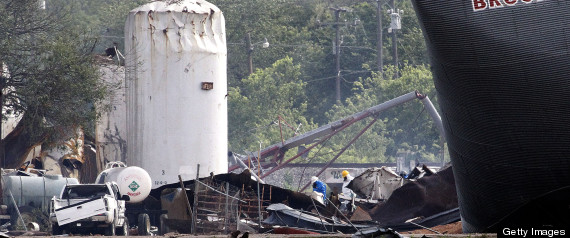
West Fertilizer Co. Failed

West Fertilizer Co. Failed To Disclose It Had Unsafe Stores Of Explosive Substance 

West Fertilizer

                     West Fertilizer


 NEW YORK, April 20 (Reuters) - The fertilizer plant that exploded on Wednesday, obliterating part of a small Texas town and killing at least 14 people, had last year been storing 1,350 times the amount of ammonium nitrate that would normally trigger safety oversight by the U.S. Department of Homeland Security (DHS).

Yet a person familiar with DHS operations said the company that owns the plant, West Fertilizer, did not tell the agency about the potentially explosive fertilizer as it is required to do, leaving one of the principal regulators of ammonium nitrate - which can also be used in bomb making - unaware of any danger there.

Fertilizer plants and depots must report to the DHS when they hold 400 lb (180 kg) or more of the substance. Filings this year with the Texas Department of State Health Services, which weren't shared with DHS, show the plant had 270 tons of it on hand last year.

A U.S. congressman and several safety experts called into question on Friday whether incomplete disclosure or regulatory gridlock may have contributed to the disaster.

"It seems this manufacturer was willfully off the grid," Rep. Bennie Thompson, (D-MS), ranking member of the House Committee on Homeland Security, said in a statement. "This facility was known to have chemicals well above the threshold amount to be regulated under the Chemical Facility Anti-Terrorism Standards Act (CFATS), yet we understand that DHS did not even know the plant existed until it blew up."

Company officials did not return repeated calls seeking comment on its handling of chemicals and reporting practices. Late on Friday, plant owner Donald Adair released a general statement expressing sorrow over the incident but saying West Fertilizer would have little further comment while it cooperated with investigators to try to determine what happened.

"This tragedy will continue to hurt deeply for generations to come," Adair said in the statement.

Failure to report significant volumes of hazardous chemicals at a site can lead the DHS to fine or shut down fertilizer operations, a person familiar with the agency's monitoring regime said. Though the DHS has the authority to carry out spot inspections at facilities, it has a small budget for that and only a "small number" of field auditors, the person said.

Firms are responsible for self reporting the volumes of ammonium nitrate and other volatile chemicals they hold to the DHS, which then helps measure plant risks and devise security and safety plans based on them.

Since the agency never received any so-called top-screen report from West Fertilizer, the facility was not regulated or monitored by the DHS under its CFAT standards, largely designed to prevent sabotage of sites and to keep chemicals from falling into criminal hands.

The DHS focuses "specifically on enhancing security to reduce the risk of terrorism at certain high-risk chemical facilities," said agency spokesman Peter Boogaard. "The West Fertilizer Co. facility in West, Texas is not currently regulated under the CFATS program."

The West Fertilizer facility was subject to other reporting, permitting and safety programs, spread across at least seven state and federal agencies, a patchwork of regulation that critics say makes it difficult to ensure thorough oversight.

An expert in chemical safety standards said the two major federal government programs that are supposed to ensure chemical safety in industry - led by the Environmental Protection Agency (EPA) and Occupational Safety and Health Administration (OSHA) - do not regulate the handling or storage of ammonium nitrate. That task falls largely to the DHS and the local and state agencies that oversee emergency planning and response.

More than 4,000 sites nationwide are subject to the DHS program.

"This shows that the enforcement routine has to be more robust, on local, state and federal levels," said the expert, Sam Mannan, director of process safety center at Texas A&M University. "If information is not shared with agencies, which appears to have happened here, then the regulations won't work."


HODGEPODGE OF REGULATION

Chemical safety experts and local officials suspect this week's blast was caused when ammonium nitrate was set ablaze. Authorities suspect the disaster was an industrial accident, but haven't ruled out other possibilities.

The fertilizer is considered safe when stored properly, but can explode at high temperatures and when it reacts with other substances.

"I strongly believe that if the proper safeguards were in place, as are at thousands of (DHS) CFATS-regulated plants across the country, the loss of life and destruction could have been far less extensive," said Rep. Thompson.

A blaze was reported shortly before a massive explosion leveled dozens of homes and blew out an apartment building.

A Ryder truck packed with the substance mixed with fuel oil exploded to raze the Oklahoma federal building in 1995. Another liquid gas fertilizer kept on the West Fertilizer site, anhydrous ammonia, is subject to DHS reporting and can explode under extreme heat.

Wednesday's blast heightens concerns that regulations governing ammonium nitrate and other chemicals - present in at least 6,000 depots and plants in farming states across the country - are insufficient. The facilities serve farmers in rural areas that typically lack stringent land zoning controls, many of the facilities sit near residential areas.

Apart from the DHS, the West Fertilizer site was subject to a hodgepodge of regulation by the EPA, OSHA, the U.S. Department of Transportation, the Texas Department of State Health Services, the Texas Commission on Environmental Quality and the Office of the Texas State Chemist.

But the material is exempt from some mainstays of U.S. chemicals safety programs. For instance, the EPA's Risk Management Program (RMP) requires companies to submit plans describing their handling and storage of certain hazardous chemicals. Ammonium nitrate is not among the chemicals that must be reported.

In its RMP filings, West Fertilizer reported on its storage of anhydrous ammonia and said that it did not expect a fire or explosion to affect the facility, even in a worst-case scenario. And it had not installed safeguards such as blast walls around the plant.

A separate EPA program, known as Tier II, requires reporting of ammonium nitrate and other hazardous chemicals stored above certain quantities. Tier II reports are submitted to local fire departments and emergency planning and response groups to help them plan for and respond to chemical disasters. In Texas, the reports are collected by the Department of State Health Services. Over the last seven years, according to reports West Fertilizer filed, 2012 was the only time the company stored ammonium nitrate at the facility.

It reported having 270 tons on site.

"That's just a god awful amount of ammonium nitrate," said Bryan Haywood, the owner of a hazardous chemical consulting firm in Milford, Ohio. "If they were doing that, I would hope they would have gotten outside help."

In response to a request from Reuters, Haywood, who has been a safety engineer for 17 years, reviewed West Fertilizer's Tier II sheets from the last six years. He said he found several items that should have triggered the attention of local emergency planning authorities - most notably the sudden appearance of a large amount of ammonium nitrate in 2012.

"As a former HAZMAT coordinator, that would have been a red flag for me," said Haywood, referring to hazardous materials. (Additional reporting by Anna Driver in Houston, Timothy Gardner and Ayesha Rascoe in Washington, and Selam Gebrekidan and Michael Pell in New York; Editing by Mary Milliken and Robert Birsel)


Dreamliner Boeing starts replacing 787 batteries

Dreamliner Boeing starts replacing 787 batteries


Japan's All Nippon Airways said new batteries had begun to be installed on its planes

Boeing has started replacing batteries on some of its grounded 787 Dreamliner fleet, moving a step closer to getting the planes flying again. 

It comes after US aircraft regulators approved a revamped battery design. Problems with the plane's battery had resulted in the entire fleet of the 787s being grounded and deliveries of the aircraft being halted. Japan's All Nippon Airways and Japan Airlines are among the first carriers that will have the batteries replaced. All Nippon Airways (ANA) and Japan Airlines (JAL) are the two biggest operators of the 787 Dreamliner. "We began the work as we have received instructions from Boeing following the Federal Aviation Administration (FAA) approval," a spokesman for JAL said. "But we have not decided on the timing of the 787 flight resumption." Ryosei Nomura, a spokesman for ANA, said that the technicians had started installing new batteries on five of its 17 Dreamliner aircraft. The carriers still have to wait for approval from various regulators before they can start to fly the planes commercially. Further approval The FAA, which approved the battery design last week, has said that it will issue a final directive on the Dreamliner this week. Other international regulators are likely to follow. but it may still be a couple of weeks before flights resume. The plane is the first in the world to use the lithium-ion batteries, which are lighter, hold more power and recharge more quickly. But after incidents in which some of the batteries emitted smoke, all of the 50 Boeing 787 planes in service were grounded in mid-January. The problems sparked a battery fire on a parked JAL 787 at Boston's Logan International Airport and another incident in which battery smoke forced an emergency landing of an ANA 787 in Japan. The grounding has cost Boeing an estimated $600m (£393m). Japanese carrier ANA lost some 1.4bn yen ($15m; £9.5m) in revenue through January's disruption alone.

source link:www.bbc.co.uk

Here’s what it would take for Apple to collapse to $340

Here’s what it would take for Apple to collapse to $340

Apple Inc CEO Tim Cook will release second-quarter results Tuesday after the bell.

A year ago, analysts were imagining scenarios that would send Apple’s stock to $1,000 a share. This year, they’re trying to figure out how it doesn’t go to zero.
On Friday, Barclays analyst Ben Reitzes lowered his price target to $465 from $535. Apple Inc releases its second-quarter results Tuesday after the bell. In the note explaining the $465 price target, he laid out a doomsday-type scenario that would lead to Apple‘s stock breaking down further and reaching $340 a share. In his opinion, it’s all about margins. If Apple’s gross margins crashed to 33%, down from 38.6% last quarter, he thinks the stock tanks. The gross margins would collapse if Apple was forced to lower the price of the iPad and the iPhone to fend off competition in the market. He also speculates that Apple could run into manufacturing problems with Foxconn, and TSMC. Reitzes says that Apple had supply problems with the iPhone 5 because its “incell” screen technology was difficult to manufacture. He also says there were issues with the aluminum casings getting scratched. He also notes that Apple couldn’t supply iPad Minis or iMacs initially. He says, “The rather pervasive level of these constraints seems increasingly supportive of the view that Apple is struggling to properly execute of late.” If Apple’s next wave of products suffers from production issues, it will hit the company’s margins. He also says Apple plans “to fully transition away from Samsung to TSMC for application processors.” This could lead to complications if TSMC can’t meet Apple’s needs. If Apple can’t sell products to users, then he thinks users could opt for a rival platform. One other risk for Apple — losing executives. Right now, the executive team is fairly solid and has guided Apple through its glory years. If Apple were to lose those people it would be a negative for the stock. This is, again, the worst case scenario. Reitzes thinks Apple’s margins actually go to 36%. He thinks Apple mixes in lower cost iPads and iPhones which hit the margin. He thinks growth slows down and the stock goes to $465.
Source link:http://business.financialpost.com

Sunday, April 21, 2013

IMF says easy-money

IMF says easy-money policies still needed


Tharman Shanmugaratnam
IMF Managing Director said bond-buying by central banks should be paired with government deficit-cutting "at the right pace." Otherwise, the debt reduction can stifle growth.
 
WASHINGTON — Finance ministers from around the world agreed this weekend that easy-money policies in many countries are still needed but must be accompanied by debt reduction and other reforms to promote economic and job growth, top officials of the International Monetary Fund said Saturday.
"There still needs to be (monetary stimulus)," Tharman Shanmugaratnam, chairman of the IMF's international monetary and finance committee, told reporters at the conclusion of the group's spring meeting. "But over-reliance" on that strategy without deficit-cutting "is unlikely to lead us back to growth."
The U.S., the U.K. and, more recently, Japan are among nations that are buying massive amounts of government bonds to hold down interest rates and spur more borrowing and economic activity. The programs also have driven investments into riskier assets, driving up stock markets. But they risk eventual inflation and tend to weaken the currencies of the nations buying the bonds. That boosts their exports, sometimes prompting complaints of unfair trade advantages by other countries.
IMF Managing Director Christine Lagarde said the bond-buying by central banks should be paired with government deficit-cutting "at the right pace." Otherwise, the debt reduction can stifle growth.
European countries, the two IMF officials said, also must complete structural reforms. Countries with rigid labor laws that crimp productivity are working to loosen them. And the eurozone plans to establish a banking union that can help solidify banks that face future crises, giving investors more confidence to invest in the institutions.
Lagarde said IMF officials are beginning to study the potential impacts when central banks, including the U.S. Federal Reserve, begin to sell their vast bond holdings. If they unload them too slowly they might be unable to head off excessive inflation. But if they sell them too quickly they could push their countries back into recession.
Europe's financial crisis largely has eased after the European Central Bank announced last year that it would buy the government bonds of deeply indebted countries to lower their borrowing costs.The ECB is also providing cheap loans to banks.
But the 17 countries using the euro currency remain mired in recession. Many are cutting spending sharply and raising taxes to slash mountainous debt. The austerity is squelching growth in several countries. That's prompting a contentious debate about whether the belt-tightening, favored by countries such as Germany, is too aggressive and may be counterproductive because it reduces tax revenue.
Much of Europe is beset with double-digit unemployment, and citizens are blaming governments for an erosion in their living standards.
Many banks, meanwhile, have little capital and are reluctant to lend, hampering small and midsize business growth.
News source:www.usatoday.com

Saturday, April 20, 2013

McDonald's fails to boost sales with Dollar Menu

 McDonald's fails to boost

McDonald`s Dollar Menu

McDonald's managed to eke out a higher profit for its first quarter even as the world's biggest hamburger chain failed to lift sales with its Dollar Menu.
The company said Friday that an important sales measurement fell 1 percent during the period and warned that it's expected to dip again in April.
That marked the first quarterly decline in a decade in sales at restaurants open at least 13 months and underscored the troubles the company has been facing.
As Burger King and Wendy's have stepped up their marketing over the past year or so, McDonald's has responded by aggressively touting its Dollar Menu and other value deals to hold onto customers in an industry where imitation is rampant.

The strategy has caused concern among analysts who worry that it could eat into profit margins. It's also rankled some McDonald's franchisees, who operate the vast majority of its restaurants in the U.S.
But in a conference call with analysts Friday, McDonald's executives insisted that offering cheaper prices was necessary in the current climate. Since the restaurant industry is barely growing, they said McDonald's needs to steal customers away from rivals to grow.
"That battle for market share has become so critical for the long-term health of business, we're willing to sacrifice that margin," said Peter Bensen, the company's chief financial officer.
Although profit margins declined during the first quarter, McDonald's noted that it picked off market share in many parts of the world, including the U.S.
But there are signs such deals aren't sitting well with the independent franchisees who operate restaurants.
A survey by Janney Capital Markets released this week found that a sampling of 25 U.S. franchisees who collectively operate 180 McDonald's restaurants on average rated their relations with the company below their historic levels. Janney said some complained about excessive coupons and discounts.
Meanwhile, McDonald's emphasis on the Dollar Menu, which began last year, has had a ripple effect in the industry. Burger King recently said it's retooling its strategy and is now touting a deal for a $1.29 Junior Whopper, among others. Wendy's also revamped its value menu last year, saying it wants to offer customers more options.

The focus value menus and deals, which have long a staple in the traditional fast-food industry, is in contrast to attempts by the same chains to evolve and adapt to changing tastes. As more people flock to places such as Chipotle and Panera McDonald's has also tried to freshen up its offerings and raise the image of its food. In addition to the chicken McWraps, for example, the company is rolling out a version of its Egg McMuffin made with egg whites next week.
Such items are generally more expensive, and CEO Don Thompson noted that they could help improve margins in coming quarters.
For the three months ended March 31, the global sales drop included a 1.2 percent decline in the U.S. The sales figure fell 1.1 percent in Europe, the company's biggest region by sales.
It fell 3.3 percent in the region encompassing Asia, the Middle East and Africa, reflecting weakness in Japan and a 4.6 percent drop in China. The company blamed the decline partly on the aftereffects of the recent scare of the chicken supply for KFC, which is owned by Yum Brands Inc.
McDonald's Corp., based in Oak Brook, Ill., has more than 34,000 locations worldwide, about 14,000 of those in the U.S.
For the quarter, it earned $1.27 billion, or $1.26 per share. That compares with $1.267 billion, or $1.23 per share, a year ago.
Revenue edged up 1 percent to $6.6 billion.
Analysts expected a profit of $1.26 per share on revenue of $6.59 billion, according to FactSet.
Shares fell $1.99, or 2 percent, to close at $99.92 Friday.
Source Link: www.newsday.com

IBM stock tumbles on first earnings

IBM stock tumbles on first earnings miss since 2005


IBM
IBM
International Business Machines (IBM) went from being a hot stock to a hot potato for investors Friday after the computer services company reported disappointing first-quarter earnings.
Shares of the technology bellwether and favorite among many tech investors going into the year Friday fell $17.15, or 8.3%, to $190. It was the stock's largest single-day percentage decline since falling 10.1% on April 8, 2002. The loss was big enough to completely erase its gains this year and take Big Blue's shares to their lowest closing price since Dec. 28, 2012.
Investors reacted extremely negatively to the Armonk, N.Y.-based company's first-quarter profit report Thursday showing it earned $3 a share, missing Wall Street's forecast for a $3.05 profit. It was the company's first earnings miss since 2005, says Bloomberg. The company is reacting by announcing job cuts and plans to sell off some units.
IBM's decline, though, hurt the broader market, too, due to its big weighting in popular market measures. The decline in IBM stock narrowed the Dow Jones industrial average's gain Friday to 0.1%. Without IBM, the Dow would have been up 1.0%, says Howard Silverblatt of S&P Dow Jones Indices. IBM alone was responsible for a loss of 132 points on the Dow.
But IBM wasn't the only big-cap tech stock to hurt the market Friday. Shares of Apple continued their breathtaking crash, falling another $1.52 to $390.53. The S&P Information Technology index is down 0.7% this year. If Apple were removed, the index would be up 6.1%, Silverblatt says.

source Link:www.usatoday.com

Suitors back away from Dell

Suitors back away from Dell bids amid PC slump

DELL
DELL

Buyout specialist Blackstone Group LP is dropping its effort to acquire Dell, and billionaire investor Carl Icahn is reportedly unlikely to follow through on his preliminary acquisition offer, as suitors digest studies showing a staggering decline in PC sales.
The Wall Street Journal said Icahn will now likely wait to see if shareholders approve a February deal for the company to be taken private by a group that includes founder and CEO Michael Dell for $24.4 billion. The newspaper, citing an unnamed person familiar with Icahn's thinking, said that if the deal is rejected, Icahn may pursue a hostile takeover.
The news came after the company said in a securities filing Friday that Blackstone was withdrawing from the bidding process.
Blackstone and its partners said that because of the latest PC market figures, which surfaced after their bid was submitted last month, they have dropped a plan to buy most of Dell's outstanding stock for $14.25 per share. A letter from the group to a special committee of Dell board members was dated Thursday and disclosed Friday.
Blackstone's withdrawal and Icahn's new wait-and-see approach leaves Dell with the February offer from Michael Dell's group, which has offered $13.65 per share in a deal that would take the company private.
Icahn's preliminary proposal had been to acquire 58 percent of Dell stock for $15 per share while keeping it publicly traded.
PC sales have been declining as people delay replacing desktop and laptop computers and spend money instead on smartphones and tablet computers. Worldwide PC shipments plunged by 14 percent in the first three months of the year, according to IDC. That's the steepest quarterly decline during the 19 years that the research firm has been tracking the market. Dell, the world's third largest maker of desktop and laptop computers, saw PC sales fall 11 percent during the first quarter. Another research firm, Gartner, also reported large declines in PC sales.
Michael Dell believes he can turn around the company by diversifying into more profitable niches such as business software, data storage and consulting. It could be a wrenching process, something that Michael Dell believes he will be able to do if he doesn't have to worry about Wall Street's fixation on short-term results. But major shareholders have been unhappy with his group's offer, and competing bids emerged.
The Blackstone letter said that while the bidders still believe Dell is "a leading global company with strong market positions," it also cited Dell's "rapidly eroding financial profile." It noted that Dell has lowered its operating income forecast for this year to $3 billion, from $3.7 billion. That $3.7 billion, in turn, had been lowered this year from a $5.6 billion figure that Dell had circulated internally in July, according to regulatory filings.
Shares of Dell fell 55 cents, or 3.9 percent, to close at $13.40 on Friday and slipped to $13.37 in after-hours trading. It's the first time since Feb. 11 that the price has dropped below the Michael Dell group's offer price, indicating that investors no longer believe a higher bid will emerge.
When asked about Blackstone's characterization of Dell's financial profile, spokesman David Frink said in an email that the company remains focused on its customers and "providing innovative products."
A spokeswoman for New York-based Blackstone declined any additional comment on the decision. A message left for Icahn seeking comment was not immediately returned.
Initially valued at $85 million in its 1988 initial public offering, Dell went on a growth tear that turned the company into a stock market star. At the height of the dot-com boom in 2000, Dell was the world's largest PC maker, with a market value of more than $150 billion.
But Dell began to falter as other PC makers were able to lower their costs. At the same time, Hewlett-Packard Co. and other rivals forged relationships with stores that gave them the advantage of being able to showcase their machines. By 2006, HP had supplanted Dell as the world's largest PC maker. With its revenue slipping, Dell's market value had fallen to $19 billion just before the Michael Dell bid emerged.
In a show of confidence in his plan, Michael Dell is contributing $4.5 billion of his cash and stock to the proposed buyout, which is led by investment firm Silver Lake Partners. Loans would provide most of the rest of the financing. Microsoft Corp., which counts Dell among its biggest customers, is backing the deal by lending $2 billion to the buyers.
The board special committee had said it believed Blackstone's proposal could have been more lucrative than that deal. But the committee wanted to review the formal terms of Blackstone's bid before making a final assessment.
Dell has agreed to cover up to $25 million in expenses that Blackstone incurred while exploring its bid. Dell isn't reimbursing Icahn for his expenses because he refused to agree to a company demand that would have prevented him from pursuing a hostile takeover attempt.

Source Link: www.online.wsj.com